

In a report by World Metrics, 72% of travel companies say they have integrated AI into their platforms, with chatbots handling 40% of customer inquiries industry wide. Yet according to Booking.com, only 6% of travelers fully trust AI. Many still fact-check AI-generated information, find the experience impersonal, or simply don’t trust it enough to rely on it.
That gap between AI adoption and consumer trust is significant, and it could have a real impact on customer experience if you aren't paying close attention to how AI is working in your systems.
Companies spend a lot of time talking about the “secret” to great customer service and how to keep customers happy. But reality is much simpler. Customers want to feel cared for, understood, and remembered. They don't hate AI. They hate poor customer experiences that forget the human side of service. Keep that as your foundation, and you'll already be ahead of companies investing millions in technology.
That principle applies across industries, but travel raises the stakes in a very particular way. When you’re traveling, it’s rarely just a flight that’s at stake. It might be the hotel you’ve already paid for, a long-awaited vacation, an important business meeting, an urgent family situation, or simply getting home after a long trip when all you want is your own bed.
That makes travel particularly vulnerable to shifts in customer experience. Holidays create predictable peaks, while weather disruptions, cancellations, missed connections, and delays can create sudden surges in demand with almost no warning.
That’s why AI in travel CX has to do more than answer questions and why 72% of customers are willing to share their data in exchange for better experiences. Customers are already telling you what they want, loudly: faster support, less friction, and more personalized experiences. The opportunity is to put AI where AI works best, and humans where humans matter most.
The question is, are you ready to listen?
Customers want resolution, not just automation
AI chatbots are already handling, 40% of routine customer support tasks, and many companies have seen real results from these early AI initiatives. However, there's a big difference between automating a response to a common question and using Agentic AI in a way that it can take action.
For example, telling a traveler that their flight was canceled is useful. Rebooking them on the next available option, updating their itinerary, and confirming the change without making them start over is where the experience becomes more valuable.
Anybody can have a chatbot nowadays. The real value is how you use AI agents to move customers closer to resolution and make the overall experience easier.
Let's move beyond automation with these three steps:
1. Move from chatbots that answer questions to Agentic AI bots that complete goals:
Most customers contact you because they need to get something done, not because they need basic information. If a flight is canceled, they may need to rebook, update an itinerary, or understand what happens next.
That is where Agentic AI becomes more valuable. Instead of relying only on predefined intents, AI agents can recognize what the customer is trying to accomplish, reason through the right path, act across integrated systems, and escalate when a human is better suited to help.
Knowing when AI can no longer help is just as important as knowing what it can do. A well-timed handoff can prevent customer frustration and keep a complicated issue from becoming an even worse customer experience. That is why the work doesn't stop at launching the bot. You must design the conversation, engineer the logic behind it, and continuously tune how and when the AI resolves, contains, or escalates an interaction.
2. Don't forget about your bots after launch
If, on the other hand, you already have Agentic AI bots that aren't working the way they should, it's time to step back and figure out where things are going wrong. When customers repeat themselves unnecessarily, abandon interactions, get transferred when they do not need to, or fail to complete their goal, those are clear signs that something in the experience is breaking.
Your bot may need tuning. And if you have ever struggled with a bad bot yourself, you already know that a failed bot can sometimes feel worse than having no help at all.
Understanding where the customer journey is breaking is the starting point. From there, you can analyze the experience, audit the bot, tune the logic, and optimize the journey around what customers are trying to accomplish.
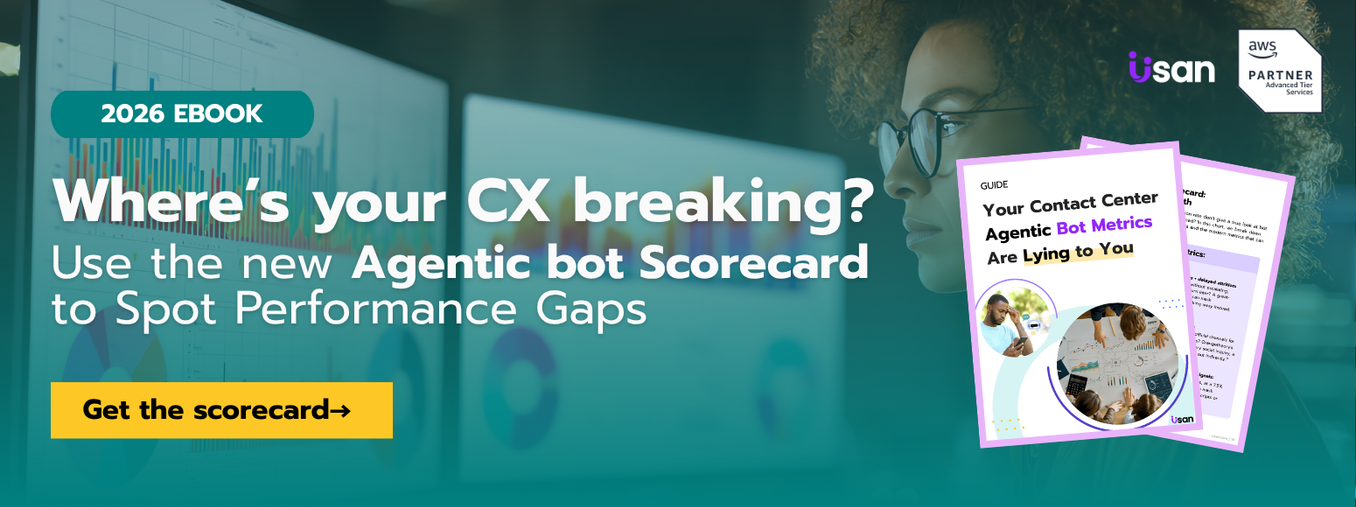
Traditional bot metrics don't always tell you whether the experience is actually working. Looking at newer signals such as goal completion, unnecessary transfers, repeated customer effort, and successful resolution can give you a much clearer picture of your bot’s health.
Even if your bots are performing well today, that doesn't mean the work is done. Customer behavior changes and business needs change. Keep improving your bots consistently so the experience can evolve with them.
3. Give human agents the support they need, too
Even the best Agentic AI won’t resolve every interaction, and it shouldn’t have to. Human agents are still at the center of what makes a contact center work. We are people, and at some point, we will all need the help of another person. There will always be situations where we need human judgment, empathy, and flexibility.
When a complex interaction reaches a human agent, AI should be working alongside them. It can carry the context forward, fill forms automatically, surface relevant information, generate summaries, and reduce the repetitive work that slows agents down.
That way, agents aren't starting from zero or asking customers to repeat everything they already explained. They have a clearer picture of what happened, what has already been tried, and what still needs to be resolved. The goal is simply to give your agents more time to focus on customer experience and less time fighting with complex systems.
Ready to Move Beyond Automation?
Maybe you are just starting to explore Agentic AI. Maybe you already have bots in production that are not delivering the experience you expected. Or maybe your biggest opportunity is giving human agents better tools to work with.
Wherever you are, the goal should be the same. Use AI to remove friction, drive better resolution, and make the travel experience easier for both customers and the people helping them.
That is where having the right CX partner can make a difference. USAN helps companies design Agentic AI experiences that complete goals, identify and tune the moments where bots break down, and give human agents the AI support they need to resolve complex interactions more effectively.
Explore USAN’s Agentic AI solutions to see where your customer experience can go next.